
Reiser, Ferie & Fritid
Reiser, Ferie & Fritid
Reiser, Ferie & Fritid
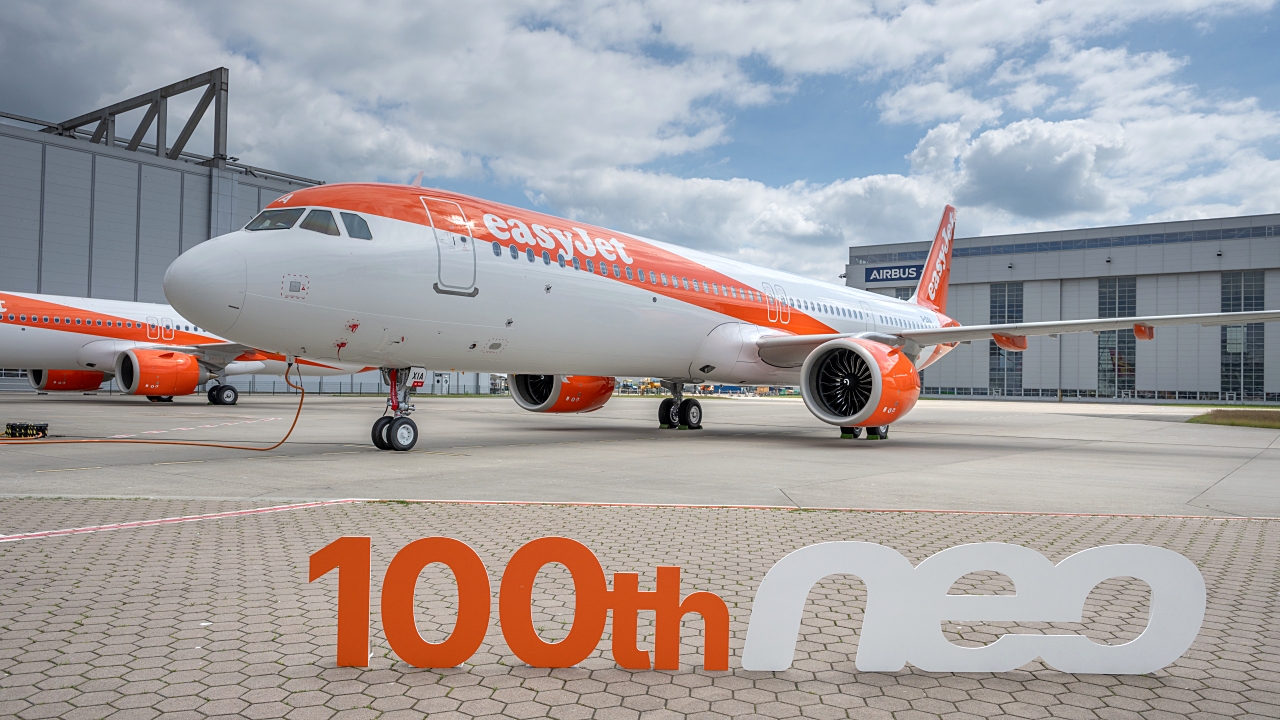
easyJet marks its 100th NEO delivery in Hamburg

easyJet has taken delivery of its 100th A320neo Family aircraft in Hamburg, underscoring the airline’s continued commitment to modernising its fleet and improving operational efficiency.
The milestone aircraft, built by Airbus, joins easyJet’s all-Airbus fleet, which now totals 359 aircraft. The addition reflects the airline’s ongoing transition towards newer, more fuel-efficient technology as part of its broader decarbonisation strategy.
All of easyJet’s new NEO aircraft will be equipped with Airbus’ latest ‘Airspace cabin’. The cabin will offer improved lighting and a refined colour palette across cabin furnishings, including sidewalls and toilets, further enhancing the modern feel of the cabin and contributing to a calm and welcoming atmosphere for customers. Accessibility has also been improved, with new braille indicators on seat row placards to help visually impaired customers locate their seats.
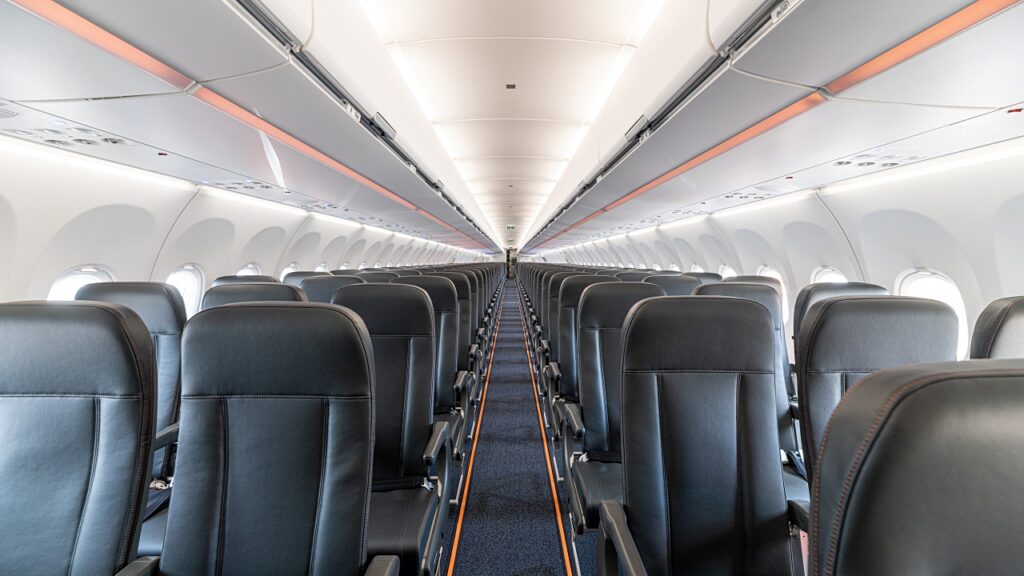
Other key features include more shoulder room, improved cabin design and lighting, redesigned toilets with touchless features for improved hygiene and increased focus on repairable and recycled materials***. Crew will also benefit from redesigned front and rear galleys, with improved storage and dual front and back ovens for the first time on both A320 and A321 NEOs.
All future aircraft will feature new non-retractable**** LED Multi-Functional Runway Lights – removing previous nose landing gear lighting to reduce drag and weight, while improving optical and reliability performance.
In addition, the aircraft, which are powered by CFM LEAP-1A engines, are capable of operating with up to 50% Sustainable Aviation Fuel today, with a pathway to 100% by 2030. Skywise-enabled digital systems will also support more efficient, data-driven operations.
The A320neo Family delivers up to 20% lower fuel burn and CO₂ emissions per seat compared to previous-generation aircraft, as well as an estimated 50% reduction in noise footprint. These efficiency gains support both lower operating costs and reduced environmental impact.
Upgrading to the most fuel efficient aircraft available on the market continues to play a central role in easyJet’s efforts to reduce carbon emissions intensity in the near term, while also enhancing customer experience and operational performance.
David Morgan, Chief Operating Officer at easyJet:
– The arrival of our 100th A320neo Family aircraft is a significant milestone for easyJet. These aircraft are at the heart of our strategy to operate a more efficient fleet and reduce our environmental impact, while continuing to enhance the travel experience for our customers and crews alike.»
Johan Pelissier, President of Region Europe and Head of Commercial Europe for Commercial Aircraft at Airbus:
– The delivery of the 100th A320neo reflects the shared DNA of innovation between Airbus and EasyJet. By integrating the world’s most efficient single-aisle aircraft at this scale, we are doing more than expanding a partnership. We are actively redefining the future of sustainable aviation. We are proud to provide the wings for easyJet’s growth and to stand together in our commitment to leading the decarbonisation of our skies.»
Gaël Méheust, President and CEO of CFM International:
– On behalf of the CFM Team worldwide, I extend our warmest congratulations to easyJet on the delivery of its 100th LEAP-1A-powered Airbus A320neo Family aircraft.”
– This milestone reflects more than 25 years of trusted partnership. Our promise for the next 25 years and beyond is to continue to provide the level of quality and support easyJet has come to expect from CFM.”
Fleet renewal remains a critical component of easyJet’s strategy in the near to medium term, with older aircraft progressively replaced by more efficient A320neo Family aircraft, supporting the airline’s target of a 35% reduction in carbon emissions intensity by 2035.
Maximising efficiencies to lower operational impact: The NEO fleet expansion is part of a wide range of initiatives easyJet is deploying to maximise efficiencies and combine many marginal gains into broader emissions reduction.
These techniques include among others:
- Seat upgrades: From 2028, easyJet will introduce new ultra-lightweight Kestrel seats across future A320neo and A321neo deliveries. The seats are over 20% lighter than the current generation, reducing aircraft weight and helping save more than 40,000 tonnes of CO₂ annually, while also offering customers up to two inches of additional legroom and enhanced comfort.
- Sharklet upgrades: easyJet is enhancing its A320ceo fleet with advanced sharklets by summer 2026, a crucial medium-term solution developed in partnership with Airbus. Sharklets are blended winglet devices installed at the tips of the wings which significantly reduce drag by weakening wingtip vortices, leading to an annual saving of approximately 308 tonnes of fuel and 970 tonnes of Co2 per aircraft, delivering immediate and measurable reductions across the fleet.
- Taxi Management Optimisation:This brings together Single‑Engine Taxiing, which cuts fuel use and carbon emissions during ground movements, with data‑driven taxi‑time calculations that ensure only the fuel needed for taxiing is loaded, reducing unnecessary weight, cost and emissions
- Lighter paints: In 2025, easyJet announced the adoption of a new lower-weight paint system, which is expected to achieve fuel savings of 1,296 tonnes and CO₂ reductions of 4,095 tonnes once fully implemented across the entire fleet by 2030. easyJet is the first airline to test this paint solution developed by Mankiewicz Aviation Coatings.
- APU Reduction: We have equipped all contact stands at Milan Malpensa Airport with Pre-Conditioned Air units, 16 in total. These units enable our pilots to switch the APU off for the majority of the turnaround, regardless of temperature enabling significant APU savings, with an average of 2kg of fuel and 6kg of C02 per minute.
- FANS–C: We invested in Airbus‑developed FANS‑C navigation software across our A320neo and A321neo fleet, enabling aircraft and air traffic control to share precise, real‑time flight trajectory data. This improves route planning and communication, helping reduce congestion, fuel burn, emissions and delays, while supporting more punctual operations as European airspace becomes increasingly busy.
- SpaceFlex upgrades: Starting 2026 easyJet is enhancing a number of its 180-seat A320ceo aircraft with SpaceFlex rear galley and lavatory arrangements, a highly space efficient cabin enabler developed by Airbus. SpaceFlex facilitates the installation of an extra row of seats on each aircraft, helping further reduce easyJet’s carbon intensity per passenger with no loss of passenger comfort.
For more related news in different languages - click on the links: AIRBUS – AIRBUS A 320neo – AIRLINES – EASYJET – ENGLISH NEWS
Notes:
*New Engine Option
**six A321neo and 75 A320neo
***for example, powder coated cabin sidewalls instead of traditional laminated sidewalls, saving weight and repair costs
**** LED Multi-Functional Runway Lights (MFRL) is a re-design of the 2 x Retractable Landing Lights (RLLs) and the complete set of the Nose Landing Gear (NLG) lights which featured on previous models. With this new design, the NLG lights are removed and the Landing Light design is simplified by removing the retractable mechanism (reducing fuel consumption), which helps reduce drag and weight, and improves optical and reliability performances for pilots.
Relaterte innlegg